 en
 Български


SubTotal: 00.00 BGN
This site uses cookies to help give you the best possible user experience. By continuing to browse this site you give consent for cookies to be used!
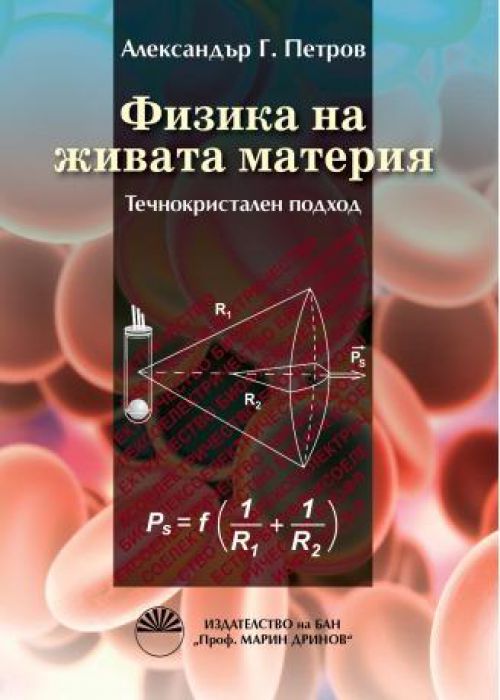
Physics of living matter
Liquid crystal approach
Aleksandar G. Petrov
10 item(s) in stock
Year of Publication: 2015
Cover Type: Hard
Category: Physics
Edition: First Edition
Pages: 535
Format: n/a
Language: Bulgarian
Summary
"Physics of living matter" is a new concept in physical terminology. The concept of "biophysics" is older and more established. However, biophysics from the point of view of the nomenclature of scientific specialties is usually considered as a part of biology that applies physical principles, methods, models and approaches to the study of the phenomenon of life. The alternative point of view of physics is that living matter is a special type of condensed state of matter, which is highly organized, self-organizing, self-sustaining and self-reproducing. Living matter from a general physical point of view belongs to a special type of condensed matter, known as soft condensed matter (also a new concept in physical terminology).
The main physical theories for describing the structure of living matter are soft matter physics, thermodynamics and statistical physics, liquid crystal physics, physical chemistry and polymer physics. This book is primarily devoted to the application of liquid crystal physics to membrane biophysics. The main objects of this approach are lyotropic liquid crystals. The lyotropic state of matter encompasses concentrated solutions of soaps and detergents, as well as a wide variety of biologically active substances (monomers and biopolymers): lipids, proteins, nucleic acids, lipopolysaccharides, etc. This type of soft matter shows all those seemingly amazing, but characteristic of liquid crystals, abilities for highly specific reactions to the weakest external influences, which are at the same time combined with relative structural stability and the ability to restore the initial structure after removing these influences. It is precisely these abilities that make the lyotropic state of matter the most suitable aggregate state for living matter (Petrov, 1999). It is also the native state of the most highly organized matter in nature – the human brain.
Аbout The Author
Specifications
ISBN: 978-954-322-799-0
DOI: n/a
Year of Publication: 2015
Category: Physics
Edition: First Edition
Language: Bulgarian
Cover Type: Hard
Pages: 535
Weight (kg): 0.700 kg
Format: n/a
Width (mm): /n/a
Height (mm): /n/a
Тhickness (mm): /n/a
Recently Viewed Books


